Adolosence CounsellingAnxietyDepressionEmotional WellnessMental HealthMental WellbeingOnline CounsellingParenting CounsellingSocial Media AddictionStressTeens Counselling
When Academic Struggles Are Emotional, Not Intellectual: A Guide for Parents
May 24, 2026
As a parent, watching your child struggle academically can be deeply distressing. You might wonder: Is it a matter of ability? Lack of effort? Or something else? While it’s easy to assume that falling behind in school is primarily an intellectual issue, many academic struggles actually stem from emotional challenges rather than cognitive deficits.
This is where academic counselling and support for student mental healthbecome crucial. Understanding that emotional wellbeing significantly influences learning can change how you approach your child’s difficulties and open doors to effective interventions.
In this guide, we’ll explore why academic struggles are often rooted in emotional factors, how emotional distress impacts learning, and why academic counselling focused on emotional support is essential for helping your child succeed.
The Hidden Emotional Side of Academic Struggles
It’s common to link grades and performance directly to intelligence or effort, but this oversimplifies the complex experience of learning. Emotional challenges such as anxiety, depression, low self-esteem, or stress can severely affect a student’s ability to focus, retain information, and perform on exams.
Some emotional factors that can mask as learning problems include:
Anxiety about failure or social acceptance
Stress from family dynamics or peer relationships
Low self-confidence related to past academic setbacks
Trauma or emotional overwhelm
Burnout from excessive pressure and unrealistic expectations
When these emotional issues aren’t addressed, they create barriers that interfere with intellectual functioning, making academic tasks more difficult.
How Emotional Challenges Affect Learning
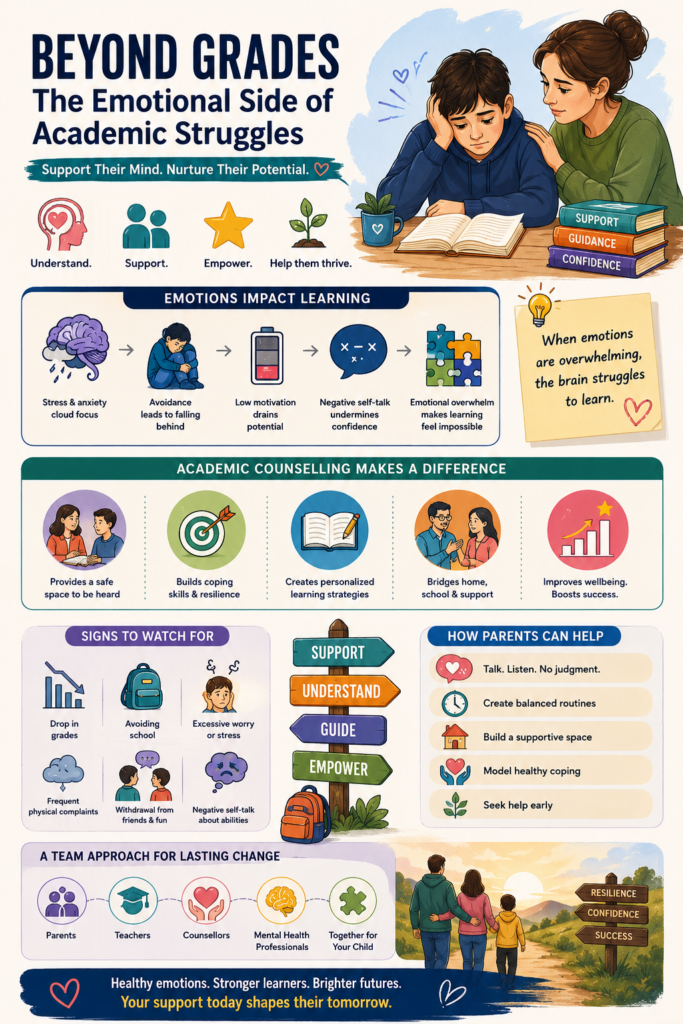
Emotions play a significant role in brain function, memory, and motivation. Here’s how emotional distress impacts academic performance:
1. Impaired Concentration and Memory
Stress and anxiety trigger the brain’s fight-or-flight response, which restricts access to higher cognitive functions like working memory and executive control—critical for problem-solving and learning.
2. Avoidance and Procrastination
Emotional distress often leads students to avoid academic tasks, creating cycles of procrastination and increased stress over deadlines.
3. Negative Self-Talk and Low Motivation
Persistent feelings of inadequacy or fear of failure can undermine motivation, leading to disengagement from learning activities.
4. Difficulty Regulating Emotions
Students struggling emotionally may find it hard to manage frustration or disappointment, resulting in outbursts, withdrawal, or inconsistent effort.
What Is Academic Counselling?
Academic counselling provides targeted support that integrates educational guidance with emotional and psychological care. It is designed to help students overcome the emotional barriers hindering their academic progress and develop effective learning strategies.
Counsellors work collaboratively with students and families to:
Identify emotional issues affecting school performance
Build coping skills for stress and anxiety
Enhance self-esteem and resilience
Develop personalized learning plans
Improve communication between home, school, and support services
Unlike traditional tutoring that focuses solely on content, academic counselling addresses the whole student—mind, emotions, and environment.
Why Parents Should Consider Academic Counselling
Parents often feel frustrated or helpless when their child’s academic difficulties persist despite efforts to study harder. Academic counselling offers a compassionate, evidence-based approach to uncover the emotional roots of these struggles.
Benefits for parents and students include:
Early identification of emotional distress: Counsellors can detect signs of anxiety, depression, or trauma that affect learning.
Improved parent-child communication: Counselling facilitates honest conversations about challenges without blame or shame.
Reduced stress through coping strategies: Students learn techniques to manage emotions and academic pressure.
Better academic outcomes: Addressing emotional wellbeing supports cognitive function and motivation.
Holistic support network: Counsellors coordinate with teachers, psychologists, and families for comprehensive care.
Signs Your Child May Need Academic Counselling
Recognizing when emotional issues are impacting your child’s academic performance is critical. Watch for these warning signs:
Sudden drop in grades or inconsistent performance
Reluctance or refusal to attend school
Excessive worry about tests or assignments
Frequent physical complaints like headaches or stomachaches
Withdrawal from friends or activities they once enjoyed
Emotional outbursts or mood swings related to schoolwork
Expressing negative beliefs about their abilities
If these behaviors persist, it’s time to seek professional support.
How Academic Counselling Supports Emotional Health and Learning
Personalized Emotional Support
Counsellors provide a safe space where students can express fears and frustrations related to school and life. This validation reduces isolation and builds trust.
Skill Development
Students learn practical skills such as relaxation techniques, time management, and problem-solving that directly improve academic engagement.
Collaboration with Schools
Academic counsellors liaise with teachers to implement accommodations or interventions tailored to the student’s emotional and learning needs.
Empowerment and Self-Advocacy
Counselling encourages students to take ownership of their learning journey, boosting confidence and independence.
Practical Tips for Parents to Support Emotional and Academic Success at Home
Foster Open Communication: Encourage your child to share their feelings about school without judgment.
Normalize Emotional Challenges: Let them know that many students face stress and anxiety, and seeking help is a strength.
Create a Supportive Study Environment: Minimize distractions and provide a quiet, organized space for homework.
Encourage Balanced Routines: Ensure time for rest, play, and social connection alongside academics.
Model Healthy Coping: Demonstrate stress management and positive self-talk in your own behavior.
Stay Involved Without Pressure: Show interest in their progress without overwhelming them with expectations.
Seek Professional Help Early: Don’t wait for problems to become severe before consulting an academic counsellor or mental health professional.
When to Combine Academic Counselling with Other Supports
Sometimes academic counselling is part of a broader support system that may include:
Psychological therapy for anxiety or depression
Educational assessments for learning disabilities
Medication management as prescribed by healthcare providers
School-based interventions and accommodations
A multidisciplinary approach ensures all aspects of your child’s wellbeing are addressed holistically.
Final Thoughts: Emotional Health Is Key to Academic Success
Academic struggles are rarely just about intellect or effort. Emotional wellbeing profoundly shapes students’ ability to learn, grow, and thrive. By recognizing the emotional roots of academic challenges and embracing academic counselling, parents can help their children build resilience, confidence, and skills necessary for lifelong success.
If your child is falling behind or showing signs of emotional distress related to school, consider reaching out to a qualified academic counsellor. Early intervention can turn struggles into stepping stones and empower your child to reach their full potential—both academically and emotionally.
Ready to Support Your Child’s Emotional and Academic Growth?
Connect with professional academic counselling services specializing in student mental health and learning support. Take the first step toward transforming your child’s school experience today.
Follow Me for More Insights
Some Thoughts on Life, Growth, and Everything In-Between
Sometimes, all it takes is a little insight or a different perspective to get unstuck. This is my space to share some of my thoughts, provide a bit of guidance, and offer practical tips on mental health, relationships, and personal growth. Think of it as a place to gather some clarity before we even talk.
Expert Counselling, Therapy & Mentoring for Every Stage of Life
Providing a bridge between human understanding, multidisciplinary support and personal or professional growth. Whether you need counselling for emotional wellness and life transitions, therapy for mental health or neurodevelopmental disorders, or mentoring for academic and business success—I offer specialized support tailored to your unique journey. From special education to executive strategy, find the path that is right for you.
Collaborative Network | versatile advisor | Inclusive Care | Online & In-Person Sessions | Serving India & Globally
Not sure where to start?
Book an initial consultation to understand the right support for your situation.
I offer flexible session formats tailored to your schedule and location—providing online (video/audio), hybrid, and in-person sessions across India and internationally. As a tech-savvy and globally accessible practitioner, I work across all time zones and am available for urgent support when your situation requires immediate attention.
Select the format that works best for you and take the first step toward clarity, growth, and emotional wellbeing.
Get in
touch
today
Select a time in my calendar to book your session, or simply call me or send a message - I'll respond promptly, whichever feels easiest for you.
Please fill in the form below
Message Sent!
Thank you for reaching out. I'll get back to you as soon as possible.
Get in touch: Call /
WhatsApp / SMS
Ready to talk? A simple call is the quickest step toward clarity. Your conversation is always 100% confidential and pressure-free.