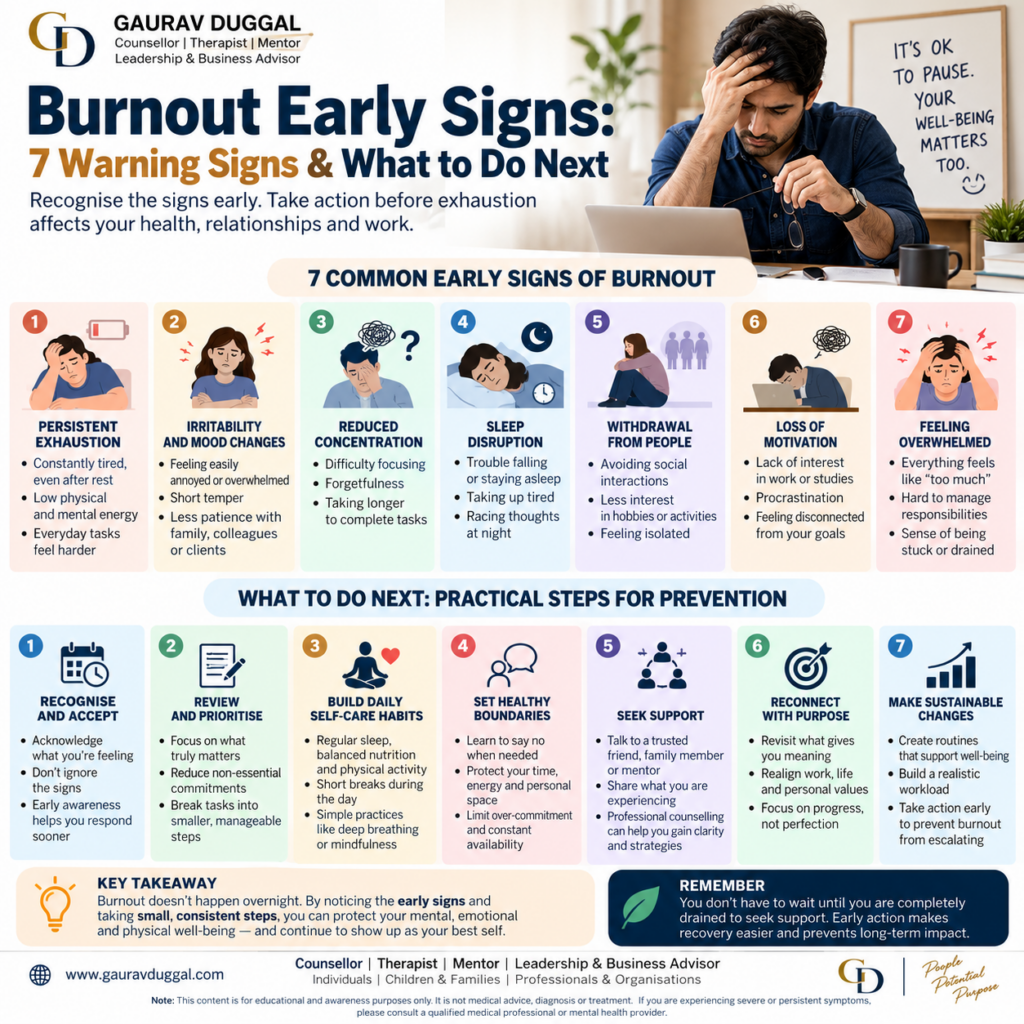
Burnout early signs can be easy to overlook because burnout rarely happens overnight.
May 5, 2026
Why We Wait Until It’s Too Late
In today’s fast-paced world, stress often feels unavoidable. Work pressure, personal responsibilities, digital overload, and constant productivity expectations can gradually drain emotional energy.
It is also important to distinguish everyday stress and exhaustion from the specific way burnout is defined in occupational health. The World Health Organization describes burnout as an occupational phenomenon resulting from chronic workplace stress that has not been successfully managed. This distinction matters because persistent exhaustion or emotional distress may have different causes and may require different forms of support.
Many people only seek help when they reach a breaking point – when emotional exhaustion, anxiety, or burnout symptoms become impossible to ignore.
But mental health support does not have to begin at that stage.
Burnout prevention is about recognizing stress early, building emotional resilience, and managing pressure before it starts affecting your wellbeing.
Just as regular health checkups prevent physical illness, early stress managementand therapycan help you stay mentally balanced, even during demanding phases of life.
Burnout Early Signs You Should Not Ignore
Burnout prevention involves identifying early signs of stress, managing emotional pressure, setting healthy boundaries, and seeking support before mental and physical exhaustion develop.
Instead of reacting to burnout, this approach focuses on staying ahead of it.
It helps individuals:
Recognize stress patterns early
Build emotional resilience
Maintain balance between work and personal life
Develop healthier coping strategies
This shift: from reactive to proactive: makes a significant difference in long-term mental health.
What Burnout Early Signs Tell You About Prevention
Burnout is not just about feeling tired for a few days. It is a deeper state of emotional, mental, and physical exhaustion caused by prolonged stress.
What causes burnout?
Burnout is typically caused by continuous stress, excessive workload, lack of work-life balance, emotional demands, and insufficient support over time.
Common causes include:
Excessive workload and unrealistic expectations
Constant connectivity and lack of downtime
Poor work-life balance
Emotionally demanding roles
Lack of support systems
Over time, these pressures can reduce motivation, impact performance, and affect overall mental health.
Early Signs of Burnout You Shouldn’t Ignore
Burnout rarely happens suddenly – it builds gradually.
What are the early signs of burnout?
Early signs of burnout include constant stress, emotional exhaustion, reduced productivity, relationship strain, and difficulty maintaining balance in daily life.
Some common warning signs include:
Chronic Stress: Feeling constantly overwhelmed, anxious, or unable to relax
Emotional Exhaustion: Feeling mentally drained, numb, or disconnected
Decreased Performance: Difficulty concentrating, reduced motivation, or low productivity
Relationship Strain: Stress affecting communication with colleagues, family, or friends
Loss of Balance: Work or responsibilities taking over personal life
Recognizing these signs early is essential for effective burnout prevention.
How to Prevent Burnout Before It Starts
Preventing burnout is not about eliminating stress completely – it is about managing it effectively.
How can you prevent burnout?
Burnout can be prevented by managing stress early, setting boundaries, maintaining work-life balance, building support systems, and seeking therapy when needed.
Here are some practical approaches:
1. Strengthen Stress Management Skills
Learning how to respond to stress is more important than avoiding it.
2. Set Healthy Boundaries
Protect your time and energy by limiting overcommitment and constant availability.
3. Build Emotional Resilience
Resilience helps you recover from challenges without feeling overwhelmed.
4. Maintain Work-Life Balance
Balancing responsibilities with rest and personal time is critical.
5. Seek Early Mental Health Support
Therapy is not just for crisis—it is a powerful tool for prevention.
The Role of Therapy in Burnout Prevention
Can therapy help prevent burnout?
Yes, therapy helps prevent burnout by improving stress management, emotional awareness, and coping strategies before exhaustion becomes severe.
Early Intervention: Small stressors can accumulate over time and eventually lead to burnout. Preventative counselling identifies emotional challenges early and helps individuals address them before they escalate.
Emotional Resilience: Resilience is the ability to adapt and recover from difficult situations. Therapy strengthens emotional coping skills so individuals can manage stress more effectively.
Improved Relationships: Unmanaged stress often affects communication and relationships. Preventative counselling helps people develop emotional awareness, empathy, and healthier communication patterns.
Increased Productivity and Focus: When stress levels are manageable, individuals can think more clearly, maintain motivation, and focus on meaningful goals.Recognize stress patterns early
By addressing challenges early, individuals can maintain stability and avoid long-term burnout.
What to Expect from Stress Management Therapy
Many people hesitate to seek support because they are unsure what therapy involves.
What happens in therapy for stress and burnout?
Therapy for stress focuses on understanding emotional patterns, building coping skills, and developing practical strategies to manage pressure and maintain balance.
Sessions typically include:
A Safe and Confidential Space: Counselling provides a non-judgmental environment where individuals can openly explore thoughts, emotions, and concerns.
Skill Development: Therapists introduce practical strategies for managing stress, improving communication, and building resilience.
Progress Tracking: Over time, individuals can monitor improvements in emotional wellbeing, coping skills, and overall life satisfaction.
Mindfulness Practices Staying present helps reduce overthinking and emotional reactivity
Healthy Boundaries Saying no and protecting personal time prevents overload
Self-Care Routines Sleep, movement, and relaxation support emotional stability
Building Support Systems Strong relationships reduce isolation and stress
These strategies support emotional resilience even during demanding periods.
Burnout Prevention for Professionals and Leaders
High-pressure roles often come with constant expectations and limited downtime.
How can professionals prevent burnout?
Professionals can prevent burnout by managing workload, setting boundaries, seeking mental health support, and maintaining work-life balance.
Preventative support helps individuals:
Manage stress more effectively
Maintain mental clarity and decision-making ability
Prevent leadership burnout
Strengthen emotional intelligence
Organizations are increasingly recognizing that mental health directly impacts productivity and performance.
Creating a Culture of Mental Wellness
Mental health awareness is growing globally, and more individuals are beginning to view therapy as a tool for maintaining overall wellbeing – not just solving problems.
Burnout prevention encourages a healthier perspective on mental health by promoting:
Proactive mental health care
Open conversations about stress
Healthier coping strategies
When individuals prioritize emotional wellbeing early, they create stronger foundations for long-term success and fulfillment.
Take Action Before Burnout Takes Over
Burnout builds slowly – but its impact can be significant.
Can burnout be prevented?
Yes, burnout can often be prevented through early stress management, emotional awareness, and consistent mental health support.
Because the goal isn’t just to recover: 👉 It’s to protect your mental health before it reaches that point.
Follow Me for More Insights
Some Thoughts on Life, Growth, and Everything In-Between
Sometimes, all it takes is a little insight or a different perspective to get unstuck. This is my space to share some of my thoughts, provide a bit of guidance, and offer practical tips on mental health, relationships, and personal growth. Think of it as a place to gather some clarity before we even talk.
Expert Counselling, Therapy & Mentoring for Every Stage of Life
Providing a bridge between human understanding, multidisciplinary support and personal or professional growth. Whether you need counselling for emotional wellness and life transitions, therapy for mental health or neurodevelopmental disorders, or mentoring for academic and business success—I offer specialized support tailored to your unique journey. From special education to executive strategy, find the path that is right for you.
Collaborative Network | versatile advisor | Inclusive Care | Online & In-Person Sessions | Serving India & Globally
Not sure where to start?
Book an initial consultation to understand the right support for your situation.
I offer flexible session formats tailored to your schedule and location—providing online (video/audio), hybrid, and in-person sessions across India and internationally. As a tech-savvy and globally accessible practitioner, I work across all time zones and am available for urgent support when your situation requires immediate attention.
Select the format that works best for you and take the first step toward clarity, growth, and emotional wellbeing.
Get in
touch
today
Select a time in my calendar to book your session, or simply call me or send a message - I'll respond promptly, whichever feels easiest for you.
Please fill in the form below
Message Sent!
Thank you for reaching out. I'll get back to you as soon as possible.
Get in touch: Call /
WhatsApp / SMS
Ready to talk? A simple call is the quickest step toward clarity. Your conversation is always 100% confidential and pressure-free.