Special Education Support: Moving Beyond Labels & IEPs
May 15, 2026
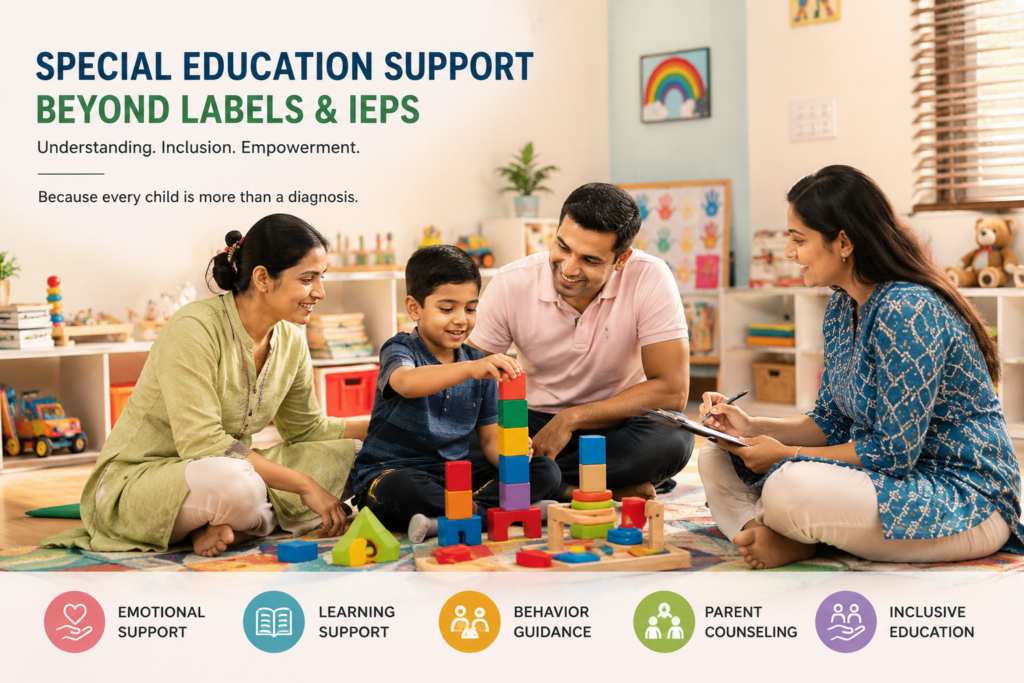
Every child learns differently. Yet, for many families, the moment a child is diagnosed with a learning difficulty, ADHD, autism spectrum condition, speech delay, or behavioural challenge, the focus quickly shifts from the child’s strengths to labels, reports, and paperwork.
While Individualized Education Programs (IEPs), assessments, and diagnoses are important, they should never define a child’s identity or limit their future. True special education counsellinggoes far beyond labels. It focuses on understanding the child as a whole person — emotionally, socially, academically, and psychologically.
Today, parents are increasingly looking for a more compassionate and holistic approach to learning disability help and inclusive education. They want support systems that nurture confidence, communication, independence, emotional regulation, and real-life success — not just academic performance.
This shift in mindset is transforming how educators, counsellors, therapists, and families work together to support children with unique learning needs.
Why Labels Alone Cannot Define a Child
Labels are often necessary for identifying support needs, but they can unintentionally create limitations when adults focus only on the diagnosis.
Children are frequently described as:
“Weak in studies”
“Hyperactive”
“Slow learner”
“Problematic”
“Different from other children”
Over time, these labels affect self-esteem and emotional development.
Many children begin believing:
“I’m not smart.”
“I always fail.”
“Others are better than me.”
“Something is wrong with me.”
This emotional burden can become more harmful than the actual learning difficulty.
Effective special education support recognises that a child is far more than academic scores or behavioural observations. It focuses on identifying strengths while gently supporting areas of difficulty.
The Real Purpose of Special Education Counselling
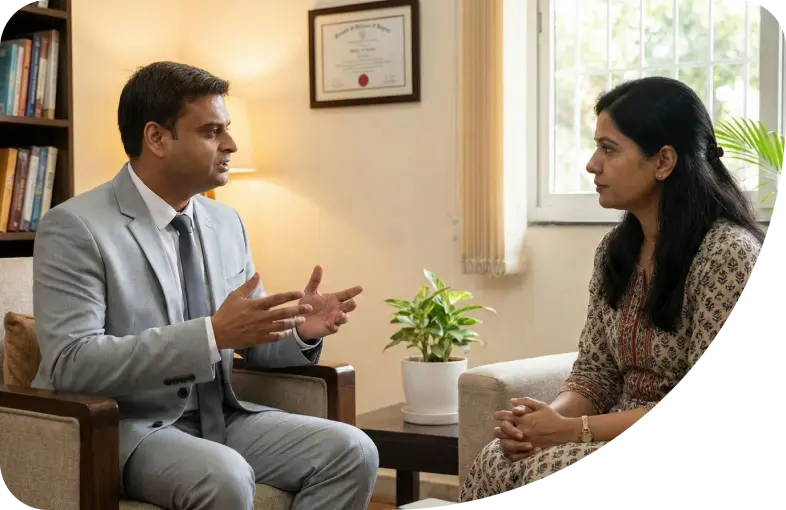
The goal of special education counselling is not simply to improve grades or classroom behaviour. It is about helping children become emotionally secure, socially confident, and capable of reaching their full potential.
A holistic counselling approach focuses on:
Emotional Development
Children with learning difficulties often experience frustration, anxiety, shame, or low self-confidence. Counselling helps them express emotions safely and build resilience.
Behavioural Understanding
Behaviour is communication. Emotional outbursts, avoidance, aggression, or inattention often indicate unmet emotional or sensory needs.
Social Skills Growth
Some children struggle with friendships, communication, teamwork, or understanding social cues. Counselling supports healthier interactions and confidence.
Parent Guidance
Parents need practical and emotional support too. Counselling helps families create healthier routines, communication styles, and behavioural strategies.
Academic Confidence
Children learn better when they feel emotionally safe and accepted. Confidence directly impacts participation and motivation.
Inclusive education means creating classrooms where every child feels welcomed, valued, and supported regardless of ability, diagnosis, or learning style.
Inclusion is not simply placing children with special needs into regular classrooms. Real inclusion requires:
Flexible teaching methods
Emotional support systems
Sensory-friendly learning environments
Individual learning approaches
Collaboration between teachers, parents, and counsellors
Peer awareness and acceptance
When schools practise inclusive education effectively, children develop:
Better emotional security
Improved communication
Stronger social confidence
Reduced feelings of isolation
Higher classroom participation
Inclusive education also benefits other students by teaching empathy, patience, acceptance, and emotional intelligence.
Early Signs a Child May Need Learning Disability Help
Some children silently struggle for years before receiving proper support. Early intervention can make a significant difference in emotional and academic outcomes.
Parents and teachers should seek professional guidance if a child consistently experiences:
Academic Challenges
Difficulty reading or writing
Poor concentration
Trouble following instructions
Inconsistent school performance
Difficulty understanding concepts
Emotional Difficulties
Anxiety related to school
Frequent crying or frustration
Low confidence
Avoiding classroom participation
Behavioural Concerns
Hyperactivity or impulsiveness
Emotional meltdowns
Aggressive reactions
Difficulty managing routines
Social Struggles
Difficulty making friends
Communication challenges
Avoiding group activities
Difficulty understanding social situations
Seeking learning disability help early is not about labelling a child negatively. It is about creating opportunities for growth and emotional support.
Every Child Has Strengths Beyond Academics
One of the most important aspects of holistic special education counselling is recognising a child’s strengths.
A child who struggles with reading may excel in:
Art
Music
Creativity
Problem-solving
Sports
Technology
Emotional intelligence
Another child may have remarkable memory, observation skills, imagination, or empathy.
Traditional education systems often focus heavily on weaknesses while ignoring strengths. This imbalance affects confidence and motivation.
Children flourish when adults recognise and celebrate what they can do rather than constantly highlighting limitations.
The Emotional Impact on Parents & Families
Parents often experience emotional stress after discovering their child may need specialised support.
Many families struggle with:
Fear about the future
Social stigma
Confusion from conflicting advice
Guilt or self-blame
Anxiety about school performance
Without guidance, families can become emotionally exhausted.
Professional counselling supports parents by helping them:
Understand their child’s needs realistically
Create healthy home routines
Improve emotional communication
Manage behavioural challenges calmly
Reduce family stress
When parents feel emotionally supported, children naturally feel safer and more secure.
Breaking Social Stigma Around Special Education
In many communities, families avoid seeking support due to fear of judgment.
Common myths include:
“The child will eventually outgrow it.”
“Counselling means something is seriously wrong.”
“Special education is only for severe disabilities.”
“The child will be treated differently.”
These misconceptions delay early intervention and increase emotional difficulties.
The truth is:
Early support improves long-term outcomes.
Counselling strengthens confidence and emotional health.
Inclusive education encourages acceptance.
Every child deserves personalised support.
Seeking professional help is a sign of awareness and responsible parenting — not weakness.
Holistic Support Strategies That Truly Help Children
Modern special education support focuses on the whole child rather than only academic correction.
Emotional Regulation Support
Children learn healthy ways to manage frustration, anxiety, and emotional overwhelm.
Sensory-Friendly Approaches
Supportive environments help children who are sensitive to sound, touch, lights, or crowded spaces.
Play-Based Learning
Interactive learning methods improve communication, attention, and emotional engagement.
Positive Behavioural Strategies
Structured routines and encouragement help children feel emotionally secure.
Social Skills Development
Children practise communication, cooperation, empathy, and relationship-building.
Strength-Based Learning
Support focuses equally on talents and capabilities, not only challenges.
Visual Infographic: The Holistic Child Support Model
A Child Thrives Best When Support Includes:
Area of Support
Positive Impact on the Child
Emotional Support
Builds confidence and resilience
Academic Assistance
Improves participation and learning
Behavioural Guidance
Reduces stress and emotional reactions
Parent Counselling
Creates stability at home
Social Skills Training
Encourages healthy friendships
Inclusive Education
Promotes belonging and self
How Parents and Schools Can Work Together
Children make the best progress when schools and families collaborate consistently.
Strong collaboration includes:
Regular communication
Shared behavioural strategies
Realistic expectations
Emotional monitoring
Positive reinforcement
Consistent routines
Success should not only be measured through grades.
Progress also includes:
Improved emotional regulation
Increased participation
Better communication
Growing confidence
Social interaction
Independence
These milestones are equally valuable indicators of growth.
The Future of Special Education Is Compassionate & Inclusive
Education is gradually moving toward more child-centred and emotionally aware support systems.
Today, educators and counsellors increasingly understand that:
Emotional well-being directly affects learning
Every child learns differently
Inclusion benefits all students
Flexibility improves engagement
Mental health support is essential
This shift is helping children feel accepted rather than judged.
Final Thoughts
Every child deserves to learn in an environment where they feel emotionally safe, respected, and understood.
True special education counselling is not about reducing children to labels or diagnoses. It is about recognising their individuality, strengths, emotions, and potential.
Through compassionate guidance, inclusive education, and personalised learning disability help, children can build confidence, resilience, communication skills, and emotional well-being that lasts far beyond the classroom.
When families, schools, and professionals work together with empathy and patience, children are empowered not only to cope — but to truly thrive.
Because a child is never just a diagnosis.
Explore learner and institutional support
See family consultation, inclusive practice review and educator-development options.
Some Thoughts on Life, Growth, and Everything In-Between
Sometimes, all it takes is a little insight or a different perspective to get unstuck. This is my space to share some of my thoughts, provide a bit of guidance, and offer practical tips on mental health, relationships, and personal growth. Think of it as a place to gather some clarity before we even talk.
Expert Counselling, Therapy & Mentoring for Every Stage of Life
Providing a bridge between human understanding, multidisciplinary support and personal or professional growth. Whether you need counselling for emotional wellness and life transitions, therapy for mental health or neurodevelopmental disorders, or mentoring for academic and business success—I offer specialized support tailored to your unique journey. From special education to executive strategy, find the path that is right for you.
Collaborative Network | versatile advisor | Inclusive Care | Online & In-Person Sessions | Serving India & Globally
Not sure where to start?
Book an initial consultation to understand the right support for your situation.
I offer flexible session formats tailored to your schedule and location—providing online (video/audio), hybrid, and in-person sessions across India and internationally. As a tech-savvy and globally accessible practitioner, I work across all time zones and am available for urgent support when your situation requires immediate attention.
Select the format that works best for you and take the first step toward clarity, growth, and emotional wellbeing.
Get in
touch
today
Select a time in my calendar to book your session, or simply call me or send a message - I'll respond promptly, whichever feels easiest for you.
Please fill in the form below
Message Sent!
Thank you for reaching out. I'll get back to you as soon as possible.
Get in touch: Call /
WhatsApp / SMS
Ready to talk? A simple call is the quickest step toward clarity. Your conversation is always 100% confidential and pressure-free.