Special Education Support: Moving Beyond Labels & IEPs
May 12, 2026
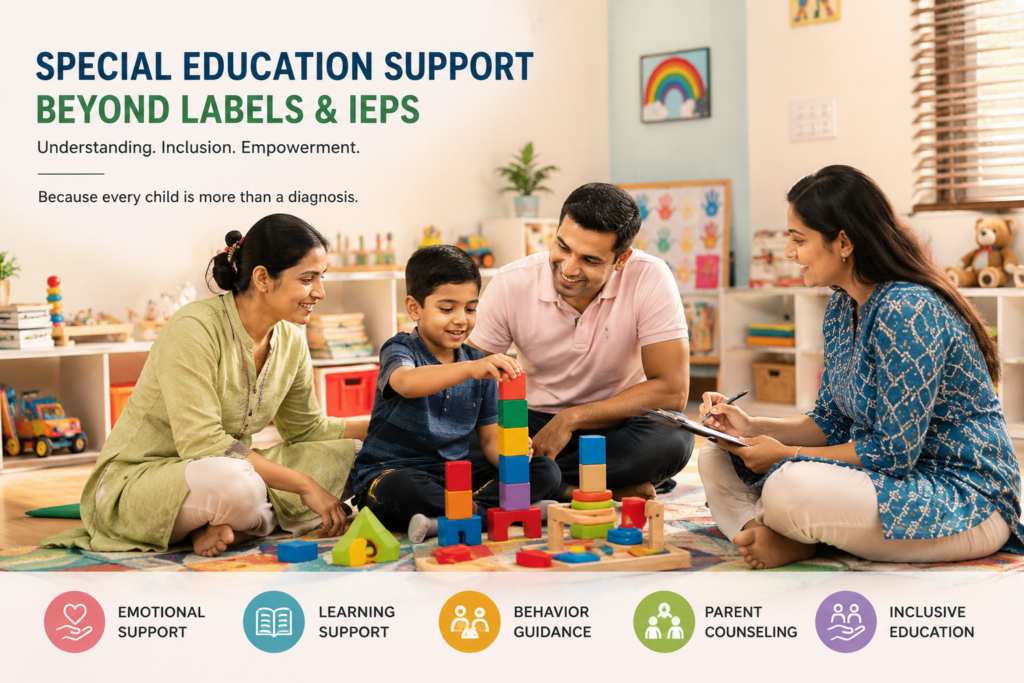
Every Child Deserves to Be Seen Beyond a Diagnosis
When a child struggles in school, families often begin a journey filled with assessments, reports, school meetings, and labels. Terms like ADHD, dyslexia, autism spectrum disorder, or learning disability can quickly become the focus of conversations. While these diagnoses can help identify support needs, they should never define a child’s identity or future.
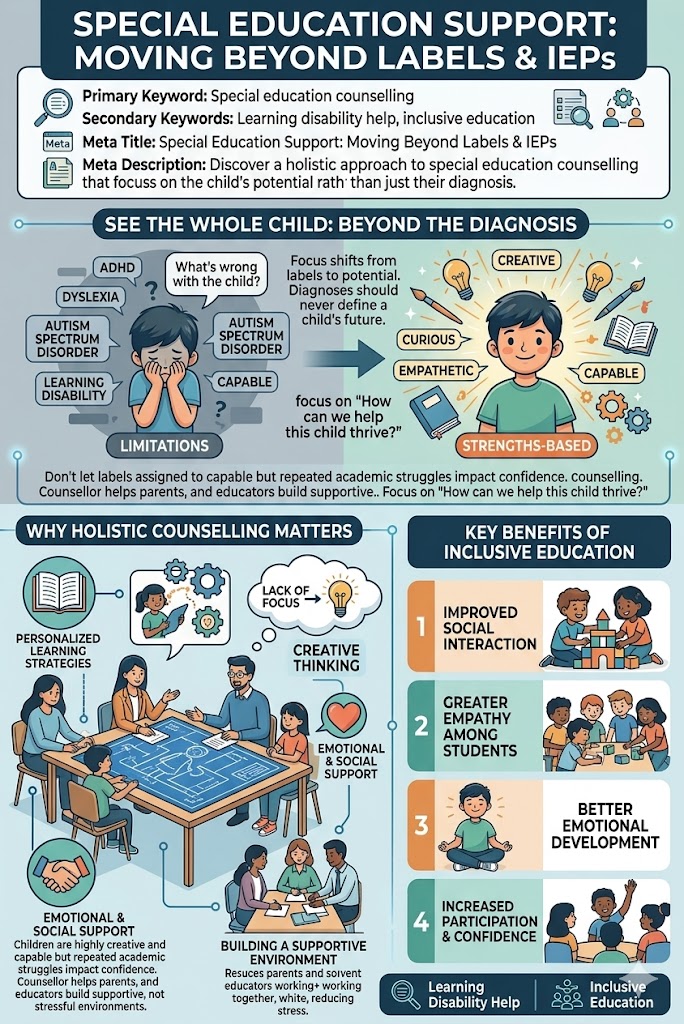
Many parents worry that once a label is assigned, their child may only be viewed through limitations rather than strengths. This is why holistic special education counselling is becoming increasingly important. It shifts the focus from “What is wrong with the child?” to “How can we help this child thrive emotionally, socially, and academically?”
This blog explores how moving beyond labels and Individualized Education Programs (IEPs) can create more meaningful support systems through inclusive education, emotional wellbeing, and personalized learning strategies.
Why Special Education Counselling Matters Today
Modern education systems are evolving, but many children still feel misunderstood in traditional classroom settings. Some children process information differently, require additional emotional support, or learn best through non-traditional methods.
This is where special education counselling becomes valuable. It helps children, parents, and educators work together to build an environment where learning becomes supportive rather than stressful.
Children with learning differences are often highly creative, curious, empathetic, and capable. However, repeated academic struggles can impact confidence and emotional wellbeing. Without the right support, these children may begin to believe they are “not smart enough” or incapable of succeeding.
A child-centered counselling approach focuses on:
Emotional development
Academic support
Behavioural understanding
Social communication
Family guidance
Confidence building
This support is relevant across different educational systems, cultures, and age groups. Whether a child attends a mainstream school, alternative learning program, or inclusive classroom, the goal remains the same: helping them feel understood and empowered.
Understanding the Limitations of Labels and IEPs
Labels Can Provide Direction — But Not Identity
Educational labels and diagnoses can help schools identify accommodations and support requirements. IEPs also play an important role in outlining educational goals and classroom strategies.
However, relying only on labels may unintentionally create limitations.
Children may begin to:
Compare themselves negatively with peers
Feel isolated or “different”
Lose confidence in academic settings
Avoid participation in class
Experience anxiety related to learning
Parents may also feel overwhelmed by technical language, school expectations, and uncertainty about their child’s future.
A diagnosis should be treated as a tool for understanding — not as a measure of potential.
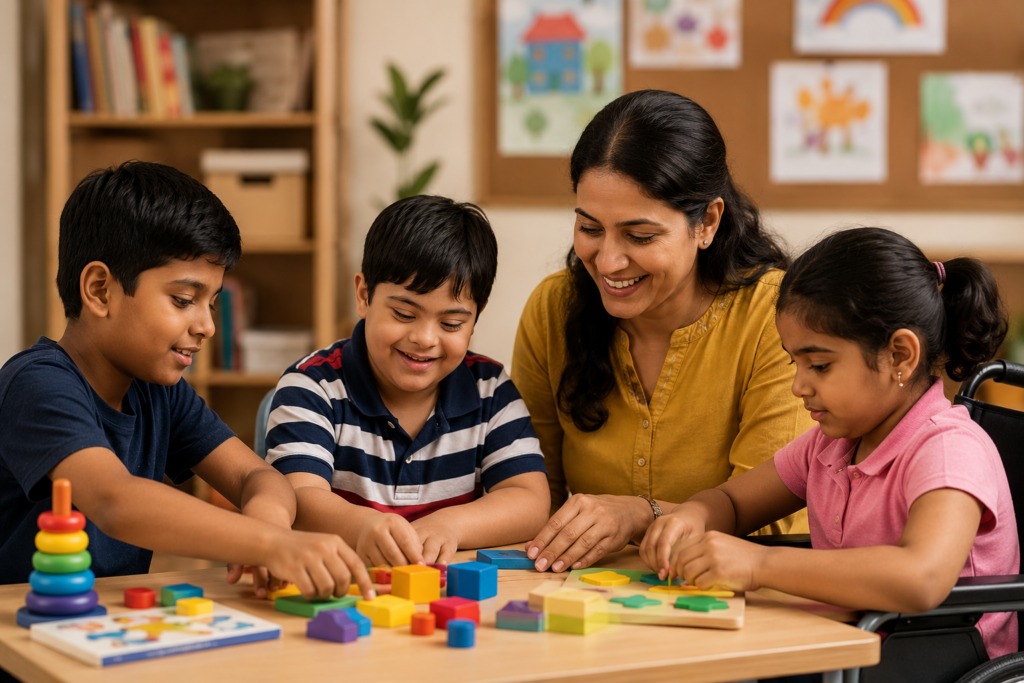
One of the most effective ways to move beyond labels is through inclusive education. Inclusive learning environments encourage children of different abilities to learn together with appropriate support systems in place.
Benefits of inclusive education include:
Improved social interaction
Greater empathy among students
Better emotional development
Increased participation and confidence
Reduced stigma around learning differences
Inclusive education helps children feel accepted rather than separated.
Holistic Learning Disability Help: Supporting the Whole Child
Children with learning differences often require support that goes beyond academics. Emotional wellbeing, communication skills, sensory regulation, and confidence all influence how a child learns.
Common Signs a Child May Need Learning Disability Help
Parents and teachers may notice:
Signs to Observe
Possible Impact
Difficulty reading or writing
Academic frustration
Trouble following instructions
Reduced classroom participation
Frequent emotional outbursts
Difficulty regulating emotions
Early intervention and personalized learning disability help can improve both educational and emotional outcomes.
What Holistic Support May Include
Effective special education counselling often combines:
Emotional counselling
Behavioural strategies
Parent coaching
Sensory support
Social skill development
Academic accommodations
Strength-based learning methods
The focus is not only on improving grades but also on helping children feel capable, safe, and motivated.
The Importance of Emotional Wellbeing in Learning
Children learn best when they feel emotionally secure. Unfortunately, many children with learning challenges experience repeated criticism, comparison, or pressure.
Over time, this may lead to:
Anxiety
Low self-esteem
School refusal
Frustration
Emotional shutdown
Building Confidence Through Supportive Learning
A holistic counselling approach helps children:
Understand their emotions
Develop coping skills
Build resilience
Improve communication
Feel confident in their abilities
Instead of focusing only on weaknesses, counsellors help children identify strengths and celebrate progress.
For example, a child struggling with reading may excel in:
Art and creativity
Problem-solving
Music
Storytelling
Visual thinking
Hands-on activities
Recognizing strengths creates motivation and encourages participation.
Practical Strategies That Support Children Beyond Labels
Families and educators can create meaningful support systems through small but consistent changes.
Actionable Ways to Support a Child’s Learning Journey
1. Focus on Strengths First
Encourage activities where the child feels capable and successful. Confidence developed in one area often supports growth in others.
2. Create Predictable Routines
Children with learning differences often respond well to structure and consistency. Visual schedules and clear expectations can reduce anxiety.
3. Use Multi-Sensory Learning Methods
Combining visuals, movement, sound, and hands-on activities helps improve engagement and comprehension.
4. Encourage Open Communication
Allow children to express frustrations without fear of judgment. Emotional validation improves trust and cooperation.
5. Work Collaboratively With Professionals
Parents, teachers, and counsellors should share observations and goals regularly to create consistency across environments.
Expert Insight: Why Personalized Support Matters
Based on professional experience working with children and families, it is commonly observed that progress becomes more sustainable when support focuses on the child’s overall wellbeing rather than only academic performance.
Children are more likely to succeed when they:
Feel emotionally supported
Understand their own learning style
Experience encouragement instead of comparison
Receive individualized guidance
In many cases, small environmental adjustments and emotional support strategies create significant positive changes over time.
Self-Assessment Checklist for Parents and Educators
If you are unsure whether a child may benefit from additional support, this checklist may help.
Reflect on the Following Questions
Does the child frequently avoid schoolwork or homework?
Do they become frustrated more quickly than peers during learning tasks?
Are there noticeable difficulties with reading, writing, focus, or communication?
Does the child seem anxious or emotionally overwhelmed in academic settings?
Have teachers expressed concerns about learning or behaviour patterns?
Does the child struggle socially or avoid group participation?
Are emotional outbursts becoming more frequent during learning activities?
If several of these signs are consistently present, seeking guidance through special education counselling may provide clarity and supportive strategies.
Early support does not label a child negatively. Instead, it helps identify the tools and approaches that allow them to succeed more comfortably.
When to Seek Professional Support
Some challenges may improve with classroom adjustments and parental guidance. However, there are situations where professional support can be especially beneficial.
Signs That Additional Guidance May Help
Persistent Academic Struggles
If learning difficulties continue despite consistent support, a professional assessment may help identify underlying needs.
Emotional Distress Related to School
Frequent anxiety, meltdowns, school refusal, or emotional shutdowns should not be ignored.
Difficulty Managing Social or Behavioural Challenges
Children who struggle with communication, peer interaction, or emotional regulation may benefit from structured counselling support.
Today, support services are often available through:
In-person counselling
Online sessions
Parent guidance programs
Flexible scheduling options
School collaboration services
Seeking support is not a sign of failure. It is a proactive step toward helping a child feel understood and capable.
Supporting Children With Compassion and Possibility
Children are not defined by diagnostic reports, school labels, or learning differences. Every child deserves an environment that recognizes their strengths, respects their pace, and supports their emotional wellbeing alongside academics.
Holistic special education counselling, personalized learning disability help, and thoughtful inclusive education practices can help children build confidence, resilience, and independence over time.
The goal is not to “fix” children. The goal is to understand them better and provide the support they need to thrive in their own unique way.
Ready to Support Your Child Beyond Labels?
If your child is experiencing learning, emotional, or behavioural challenges, compassionate guidance can make a meaningful difference.
Our approach to special education counselling focuses on understanding the whole child — not just a diagnosis or IEP.
Every child deserves the opportunity to feel confident, supported, and understood.
Follow Me for More Insights
Some Thoughts on Life, Growth, and Everything In-Between
Sometimes, all it takes is a little insight or a different perspective to get unstuck. This is my space to share some of my thoughts, provide a bit of guidance, and offer practical tips on mental health, relationships, and personal growth. Think of it as a place to gather some clarity before we even talk.
Expert Counselling, Therapy & Mentoring for Every Stage of Life
Providing a bridge between clinical expertise and professional growth. Whether you need counselling for emotional wellness and life transitions, therapy for mental health or neurodevelopmental disorders, or mentoring for academic and business success—I offer specialized support tailored to your unique journey. From special education to executive strategy, find the path that is right for you.
Collaborative Network | versatile advisor | Inclusive Care | Online & In-Person Sessions | Serving India & Globally
Not sure where to start?
Book an initial consultation to understand the right support for your situation.
I offer flexible session formats tailored to your schedule and location—providing online (video/audio), hybrid, and in-person sessions across India and internationally. As a tech-savvy and globally accessible practitioner, I work across all time zones and am available for urgent support when your situation requires immediate attention.
Select the format that works best for you and take the first step toward clarity, growth, and emotional wellbeing.
Get in
touch
today
Select a time in my calendar to book your session, or simply call me or send a message - I'll respond promptly, whichever feels easiest for you.
Please fill in the form below
Message Sent!
Thank you for reaching out. I'll get back to you as soon as possible.
Get in touch: Call /
WhatsApp / SMS
Ready to talk? A simple call is the quickest step toward clarity. Your conversation is always 100% confidential and pressure-free.