When Stress Becomes a Mental Health Condition: How to Tell the Difference
March 7, 2026
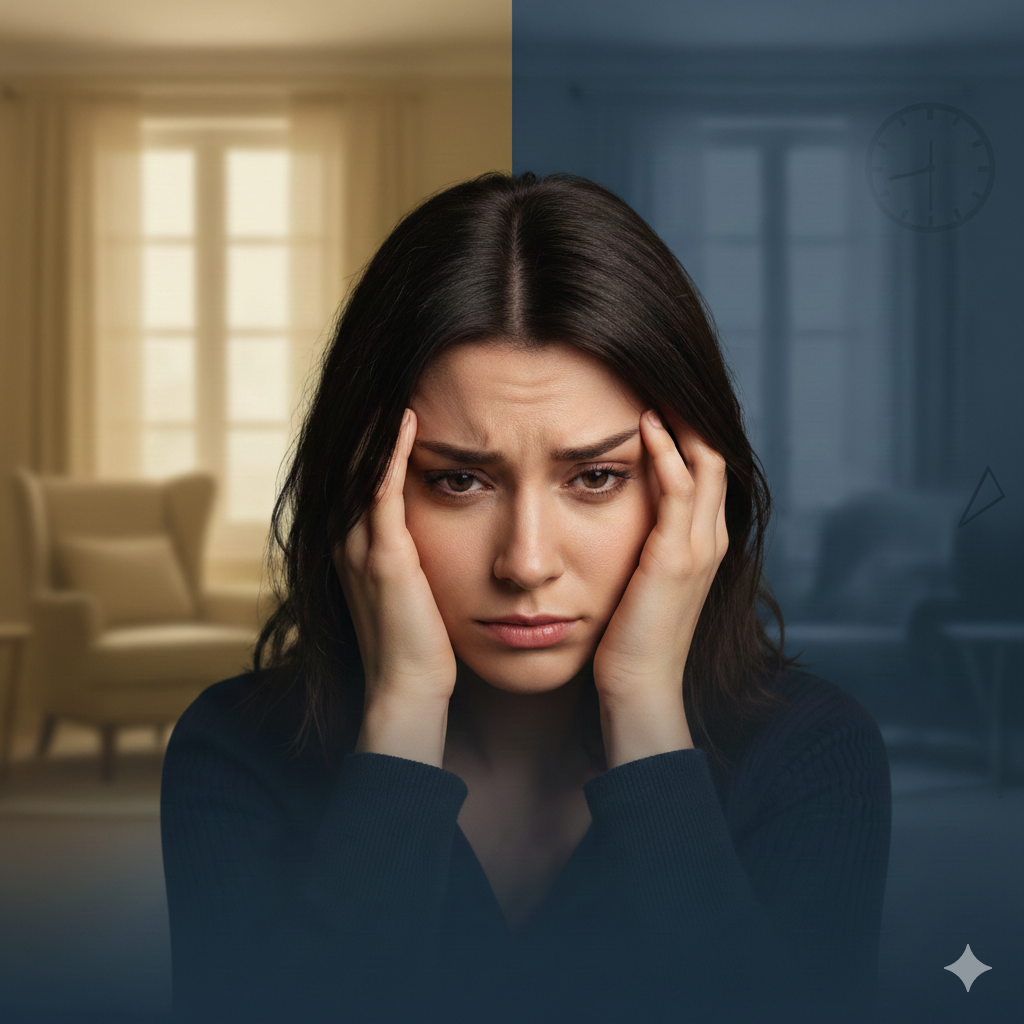
You’ve been feeling overwhelmed lately – maybe you’re sleeping too much or too little, snapping at loved ones, avoiding social plans, or just feeling numb. It’s easy to tell yourself, ‘It’s just stress.’ …But when that feeling won’t lift, it may be time to consider professional mental health counselling.”
But here’s an important reality many people miss: stress doesn’t always remain just stress.
When stress becomes chronic or unmanaged, it can evolve into deeper mental health conditions such as clinical anxiety, depression, burnout, or trauma-related responses. Recognising this shift early is crucial – because timely mental health counselling can prevent symptoms from becoming more severe or deeply ingrained.
In this blog, we’ll help you understand:
The difference between everyday stress and clinical mental health conditions
Red flags that indicate it’s time to talk to a mental health counsellor
Why “stress vs depression” isn’t always an either/or scenario
When and why mental health counselling can make a real difference
What seeking professional support actually looks like — without labels or judgement
Let’s get real. Stress is a normal part of life. But when it starts controlling your thoughts, emotions, or ability to function, that’s when it becomes a mental health condition that deserves attention.
Stress: The Normal Human Response
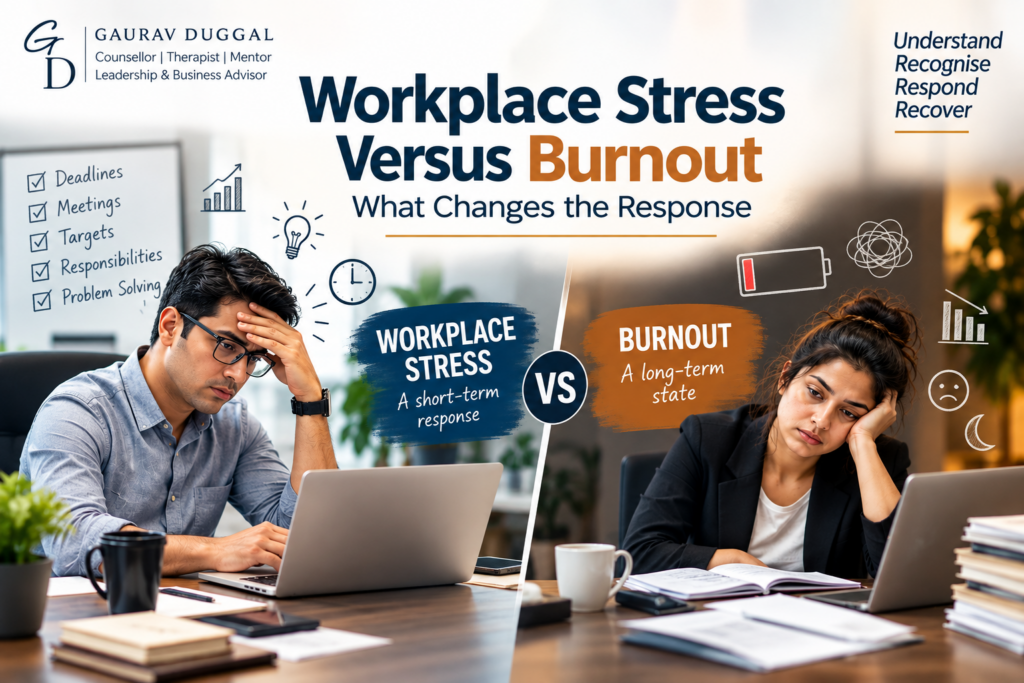
Stress is your body’s alarm system. It activates when you face pressure – facing a deadline, arguing with a friend, moving cities, starting a new job, or dealing with family drama. Crucially, “normal” stress is temporary, situational, and responsive. Once the stressor passes, your nervous system settles, and emotional balance returns.
✅ Common signs of everyday stress include:
Short-term anxiety before a presentation or exam
Irritability after a long day
Trouble sleeping the night before a big event
Physical tension such asHeadaches, muscle tension, stomach upset
Racing thoughts that ease once the situation resolves
Stress activates the fight-or-flight response – helpful in moments of challenge, but harmful when the body remains stuck in this state for too long.
When Stress Becomes a Mental Health Condition
The challenge arises when stress becomes chronic. Prolonged stress can dysregulate the nervous system, affect mood, cognition, sleep, and immunity – increasing the risk of diagnosable mental health conditions such as:
Clinical Anziety Disorders
Depression (Major Depressive Disorder)
Burnout Syndrome
Post-Traumatic Stress Disorder (PTSD)
Adjustment Disorders following major life changes
These conditions aren’t “just stress.” They’re recognised mental health concerns that require professional professional mental health counselling, often including therapy, sometimes medication, lifestyle changes, and support systems.
Feature
Everyday Stress
Clinical Mental Health Condition
Duration
Short-term; usually lasts a few days to a couple of weeks.
Persistent; lasts for several weeks, months, or longer.
Triggers
Tied to a clear external cause (deadlines, conflict, events).
May persist or appear even when life seems “fine” on the surface.
Impact on Life
Mild interference with daily life – Irritating or tiring, but you can still generally meet obligations.
Significant impairment; affects your ability to work, study, or maintain relationships.
Physical Signs
Temporary tension, such as a “nervous stomach” or a mild headache.
Chronic issues like recurring insomnia, digestive disorders, or unexplained body pain.
Emotional Tone
Primarily frustration or worry; eases when the situation improves.
Pervasive feelings of hopelessness, intense dread, or total emotional numbness.
Thought Patterns
Focused on solving the specific problem at hand.
Constant rumination, catastrophic “what-if” thinking, or heavy self-blame.
Social Behavior
Might skip a party to rest, but remains connected to loved ones.
Complete withdrawal; isolating oneself and avoiding all social interaction.
Recovery
Usually improves with self-care, sleep, or removing the stressor.
Often requires professional mental health counselling and structured support.
How to Tell the Difference: Stress vs. Clinical Mental Health Issues*
If stress feels like a storm passing through – clinical clinical anxiety or depression feels like living inside the storm.
Signs That Stress Has Become a Mental Health Condition
1. Your Symptoms Last Longer Than a Few Weeks
Stress usually lifts once the pressure eases. But when emotional or physical symptoms persist beyond 2–4 weeks, even after the stressor has reduced, it may indicate clinical anxiety or depression – both of which respond well to early counselling support. > Example: You’ve been crying every day for a month after losing your job – that’s not just stress. That’s grief + possible depression.
2. You Can’t Function Normally
Can’t concentrate at work? Skipping meals? Neglecting hygiene? Missing deadlines? Avoiding friends? > These aren’t signs of “being busy.” They’re red flags for clinical depression or anxiety. When stress starts disrupting basic functioning – work performance, self-care, relationships – it’s a strong signal that professional mental health counselling may be needed to restore balance.
3. Physical Symptoms Won’t Go Away
Chronic headaches, stomachaches, back pain, fatigue – Persistent physical symptoms without a clear medical explanation are often psychosomatic responses to unresolved stress, anxiety, or depression and are commonly addressed in counselling. > “Your body keeps score.” – Bessel van der Kolk
4. You’re Using Coping Mechanisms That Hurt You
Drinking more than usual? Using drugs to numb feelings? Overeating or undereating? Withdrawing from everyone? > These are coping strategies – but they’re damaging your health and relationships. Unhealthy coping mechanisms are often signals of emotional overload, not personal failure. Mental health counselling helps replace these patterns with safer, sustainable coping strategies.
5. You Feel Hopeless, Worthless, or Like Life Has No Meaning
Stress makes you think, “This will pass.” Clinical depression makes you think, “I’ll never feel better.” Hopelessness and persistent negative self-beliefs are hallmark signs of depression and should be taken seriously, especially when they feel constant or overwhelming.
6. Your Thoughts Are Stuck on Repeat
Ruminating? Obsessing over worst-case scenarios? Can’t stop replaying past mistakes? > That’s not overthinking – Repetitive, intrusive thinking is common in clinical anxiety and often improves significantly with structured therapeutic support.
7. You’re Avoiding Everything That Used to Bring Joy
No longer interested in hobbies, socializing, sex, food, or even scrolling TikTok? Loss of interest or pleasure – known clinically as anhedonia – is a key symptom of depression. When joy disappears across multiple areas of life, it’s a strong indicator to seek professional help.
When to Seek Mental Health Counselling
You don’t need to wait for a crisis to seek help. Mental health counselling can help when:
Stress feels unmanageable or constant
Anxiety or sadness affects daily life
You want clarity, coping tools, or emotional regulation
You feel “not like yourself” for weeks at a time
Seeking support early often shortens recovery and prevents deeper emotional distress. Don’t wait for a “breaking point” to prioritize your well-being. Whether you are dealing with a temporary rough patch or navigating clinical anxiety, professional support can provide the tools you need to thrive again.
Ready to find clarity? Book a session for mental health counselling today and let’s navigate the storm together.
Follow Me for More Insights
Some Thoughts on Life, Growth, and Everything In-Between
Sometimes, all it takes is a little insight or a different perspective to get unstuck. This is my space to share some of my thoughts, provide a bit of guidance, and offer practical tips on mental health, relationships, and personal growth. Think of it as a place to gather some clarity before we even talk.
Expert Counselling, Therapy & Mentoring for Every Stage of Life
Providing a bridge between human understanding, multidisciplinary support and personal or professional growth. Whether you need counselling for emotional wellness and life transitions, therapy for mental health or neurodevelopmental disorders, or mentoring for academic and business success—I offer specialized support tailored to your unique journey. From special education to executive strategy, find the path that is right for you.
Collaborative Network | versatile advisor | Inclusive Care | Online & In-Person Sessions | Serving India & Globally
Not sure where to start?
Book an initial consultation to understand the right support for your situation.
I offer flexible session formats tailored to your schedule and location—providing online (video/audio), hybrid, and in-person sessions across India and internationally. As a tech-savvy and globally accessible practitioner, I work across all time zones and am available for urgent support when your situation requires immediate attention.
Select the format that works best for you and take the first step toward clarity, growth, and emotional wellbeing.
Get in
touch
today
Select a time in my calendar to book your session, or simply call me or send a message - I'll respond promptly, whichever feels easiest for you.
Please fill in the form below
Message Sent!
Thank you for reaching out. I'll get back to you as soon as possible.
Get in touch: Call /
WhatsApp / SMS
Ready to talk? A simple call is the quickest step toward clarity. Your conversation is always 100% confidential and pressure-free.